



Texas Chapter of The Wildlife Society’s
2026 Annual Conference
February 18-20, 2026
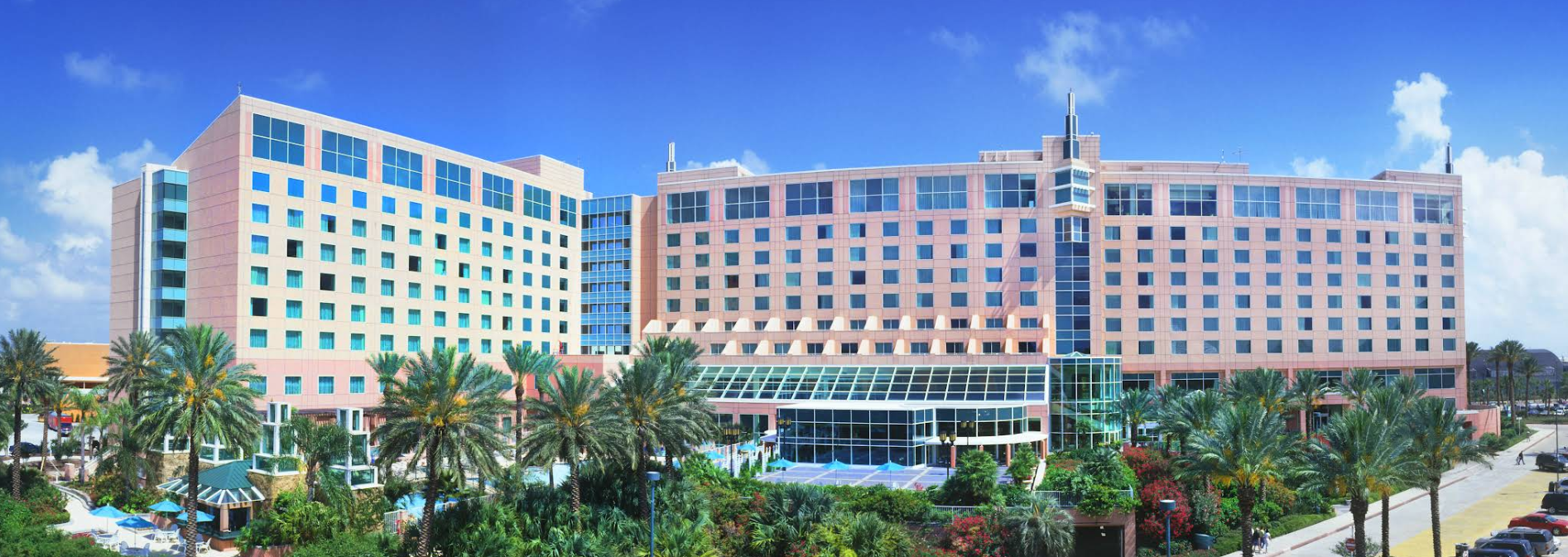
The local arrangements committee has been coordinating with the hotel, TCTWS board and committees to plan the 2026 Annual Meeting. This year’s meeting will be held at the Moody Gardens Hotel and Convention Center in Galveston from February 18th– 20th. This venue has so much to offer our members with roughly 80,000 square feet of event space at our disposal, ample onsite parking, and multiple restaurants onsite and close by! The reservation link for booking your rooms is available and linked below under the hotel group rate tab. Please go ahead and book your room early!
As we get further into the planning process, the theme, speakers, and links for registration and abstract submissions will be announced! We look forward to seeing you in February!
Jessica Glasscock
President, Texas Chapter of the Wildlife Society
Announcements will be put out via the TCTWS membership email –
Make sure your email address is up to date. Update your member profile here.
Annual meeting attendee registration will open in December 2025.
Instructions for uploading posters Instructions for uploading presentations
Moody Gardens Hotel Group Rate
Guests can book their room by using the link above (preferred method) or by calling the hotel at 409-683-1299 and referencing the Texas Chapter of The Wildlife Society – 2026 Annual Meeting.
Rate is $111/night plus taxes and fees.
Self-parking at the hotel is included. Covered parking is available for an additional cost.
Cut off date is January 27, 2026. No exceptions.
The Texas Chapter of The Wildlife Society will hold its 2026 Annual Conference in Galveston, Texas, from February 18-20, 2026. The program committee will begin accepting abstracts for oral presentations and poster presentations beginning October 1st through November 30th. Abstracts meeting criteria related to all aspects of wildlife ecology, management, policy, human dimensions, and conservation are invited.
Oral Presentations will be presented live and in-person at the conference. Each oral presentation will be allotted 15 minutes, which includes 12 minutes for the presentation and three minutes for questions. Oral presentations presenting the results of wildlife field investigations and analyses as well as topic reviews of interest to wildlife students and professionals in Texas are encouraged. Oral presentations should present results or outcomes. Abstracts reporting preliminary or no data should be submitted as a poster.
Clarence Cottam Award – Students with excellent completed research are encouraged to submit abstracts for consideration for the Clarence Cottam Award. The Clarence Cottam Award is the most prestigious student award given by the Texas Chapter of The Wildlife Society to recognize and promote student research excellence in wildlife biology, conservation, and management. Selected participants will have the opportunity to present their research to the entire membership during the annual conference. The winners are recognized for their outstanding research contributions, awarded a scholarship, and become part of the more than 30-year history of the Clarence Cottam Award.
Eligibility includes students affiliated with a Texas college or university at the time of research or students with a non-Texas based college or university but where fieldwork/research were conducted in Texas. Students who have graduated since the last meeting are also eligible if they are current members of the Texas Chapter of The Wildlife Society.
Cottam award participants are required to submit two abstracts: one abbreviated and one extended abstract. The submission deadline for abstracts is November 30, 2025. The abbreviated and extended abstracts should follow the same instructions outlined in the general call for abstract submissions. The extended abstract should be less than or equal to 3 pages, and in the style and format of the Journal of Wildlife Management (JWM). Abstracts should include a statement of objectives, brief description of methods, concise presentation of results, and a summary of conclusions and inferences drawn. Do not include tables, appendices, or a literature cited section. Abstract submissions that are not accepted to participate in the Cottam Award presentation session will be considered for oral presentations during the general sessions.
Clarence Cottam Award presentations will be allotted 20 minutes, which includes 15 minutes for the presentation and 5 minutes for questions Presentations will be judged on originality of topic, scientific procedures, quality of display, accuracy of conclusions, and response to questions from judges. Full Clarence Cottam Award instructions can be found at: https://tctws.org/student-menu/scholarship-opportunities/clarence-cottam-award/. Any questions can be submitted to the Cottam Award Chair at cottam.awards@tctws.org.
Poster Presentations – Abstracts for poster presentations may be submitted by students or professionals. Undergraduate, M.S., and Ph.D. students may elect to enter the student poster competition, while professionals and students not wishing to compete may submit under the non-competitive category.
Posters in the student competition will be judged on the significance of the research, soundness of scientific procedures, quality of the abstract and display, clarity of results, accuracy of conclusions, and responses to judges’ questions. Students with incomplete studies or proposals are welcome to submit posters, but these will not be eligible for competition.
All poster presenters will prepare a printed poster for live, in-person presentations at the conference. In addition, presenters are encouraged to upload a PDF version of their poster for asynchronous viewing through the conference mobile app and website. The maximum poster size is 4 ft wide × 3 ft tall.
Instructions for Submitting Abstracts
The submission site will lead you through the submission steps; guidelines for submissions are summarized below. The submission deadline is Sunday, November 30, 2025, at 11:59 p.m. Eastern Time. Abstracts that miss this deadline will not be considered. During submission, please indicate your preference for presentation format (i.e., oral or poster presentation) and session (i.e., General Sessions, Clarence Cottam Award, or whether you would like to be included in the judging for the best poster presentation awards). Please note: only one poster will be judged per student presenter, though students may present more than 1 poster.
Abstracts should be no longer than 250 words and follow The Journal of Wildlife Management format. Abstracts should be concise and include general problem statement, brief review of methods/experimental design, results, and management implications. For needed statistical significance statements, report P-values only (no need for exact statistical test results). Please follow formatting instructions on abstract submission website. Do not use scientific names on the abstract submission website.
Submit abstracts at:
https://www.xcdsystem.com/tctws/member/index.cfm
Sample Abstract (please note not to use scientific names in title; use only in body of abstract)
LANDSCAPE EFFECTS ON GENE FLOW AND GENETIC STRUCTURE OF NORTHERN BOBWHITE IN TEXAS AND THE GREAT PLAINS
Katherine S. Miller, Caesar Kleberg Wildlife Research Institute, Texas A&M University–Kingsville, Kingsville, TX, 78363, USA Unchanged: Katherine S. Miller, Caesar Kleberg Wildlife Research Institute, Texas A&M University–Kingsville, Kingsville, TX, 78363, USA
Leonard A. Brennan, Caesar Kleberg Wildlife Research Institute, Texas A&M University–Kingsville, Kingsville, TX, 78363, USA Unchanged: Leonard A. Brennan, Caesar Kleberg Wildlife Research Institute, Texas A&M University–Kingsville, Kingsville, TX, 78363, USA
Randy DeYoung, Caesar Kleberg Wildlife Research Institute, Texas A&M University–Kingsville, Kingsville, TX, 78363, USA Unchanged: Randy DeYoung, Caesar Kleberg Wildlife Research Institute, Texas A&M University–Kingsville, Kingsville, TX, 78363, USA
Fidel Hernández, Caesar Kleberg Wildlife Research Institute, Texas A&M University–Kingsville, Kingsville, TX, 78363, USA Unchanged: Fidel Hernández, Caesar Kleberg Wildlife Research Institute, Texas A&M University–Kingsville, Kingsville, TX, 78363, USA
X. Ben Wu, Department of Ecosystem Science and Management, Texas A&M University, College Station, TX, 77843-2138, USA Unchanged: X. Ben Wu, Department of Ecosystem Science and Management, Texas A&M University, College Station, TX, 77843-2138, USA
Abstract: Northern bobwhite (Colinus virginianus) populations have declined due to habitat loss and fragmentation. Northern bobwhite have been considered poor dispersers, so biologists expect a moderate population structure and low genetic diversity in fragmented areas. Our goal was to determine how landscape affects the genetic structure of northern bobwhite in Texas and the Great Plains. We collected tissues from 641 northern bobwhites in 23 populations, and amplified 13 microsatellite loci. We determined population structure (FST) and genetic distance between populations (Dest). We used a land cover map (National Bobwhite Conservation Initiative) to develop a landscape resistance matrix. We compared Dest to geographic distance and resistance with Mantel and partial Mantel tests. Populations showed low levels of structure (FST = 0.025). We found moderate correlations to geographic distance (r = 0.542, P < 0.001) and landscape resistance (r = 0.416, P = 0.001). There was a significant correlation between Dest and geographic distance when we accounted for resistance (r = 0.388, P < 0.001), but no significant correlation between Dest and resistance when we accounted for geographic distance. A spatial principal component analysis for South Texas samples revealed a global structure. Low genetic structure and moderate genetic diversity may suggest that more northern bobwhite individuals are dispersing further than previously thought. Other possible explanations lie in the northern bobwhite’s fall covey shuffle, their boom-and-bust population cycle, and stochastic events. Habitat is an important factor for northern bobwhite; determining how habitat affects gene flow will help biologists to manage northern bobwhite.
Abstract Evaluation
Abstracts will be evaluated based on technical merit, contribution to scientific knowledge and relevance to the field, creativity and soundness in study design, validity of results and conclusions, and general quality and adherence to formatting guidelines.
Because space is limited for both oral and poster presentations, acceptance will be determined by the evaluation of each submitted abstract. In cases where the number of submissions exceeds available slots, not all abstracts may be accepted.
Notice of decision will be made on or about January 15, 2026 via email.
Registration
All presenters MUST register and pay the appropriate conference registration fee. Registration information will be posted on TCTWS’ conference website, https://tctws.org/annual-meeting-2/annual-meeting/. We expect registration to open in December 2025. Early Bird registration is strongly encouraged and will be available through at least January 31st.
Questions? Questions about the conference program and abstracts may be directed to Program Committee at program@tctws.org.
A typical meeting will have about 500-700 attendees, 10-15 exhibitors, ~90 presentations spread over ~10 sessions, and ~90 posters. A silent auction and raffle is run in conjunction with the Awards Reception to raise money for the chapter. Subject specific workshops/trainings are held the day prior to the meeting or the morning of the first conference day. There is always a social the first night where students may meet and network with professionals.